Long before the city, the Kamikawa Ainu lived and fished along the upper Ishikari. The old name of the area, Chūbetsu, comes from the Ainu name of the Chūbetsu River, written Chiw pet on the city’s first Ainu place-name sign. By December 2025 the city had put up 42 bilingual Ainu–Japanese signs.[4][13]
- Chise house
- Mukkur mouth harp
- Carved bear
Kawamura Kaneto Ainu Memorial Museum
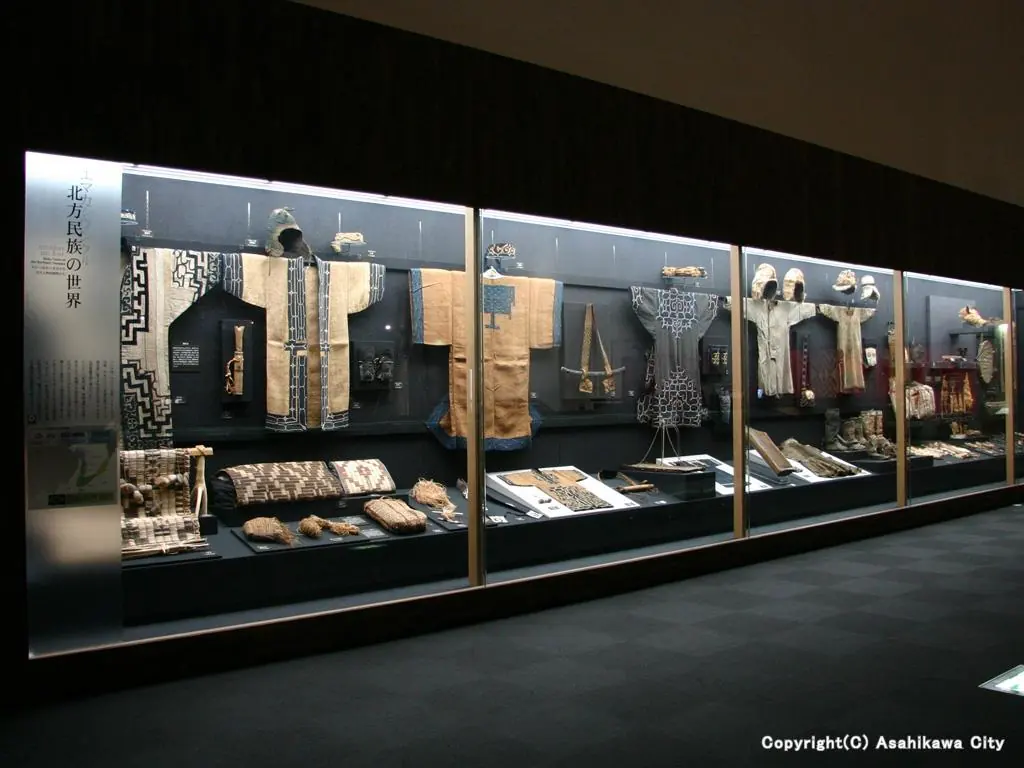
川村カ子トアイヌ記念館Opened in 1916, it calls itself Japan’s oldest Ainu museum and has been kept going privately for over a century. A thatched chise house stands in the grounds, and the curator lights its hearth every day. Workshops (booking required) include playing or making the mukkur mouth harp.[37][14][38]
The carved bear
木彫り熊Hokkaido’s classic souvenir, the carved wooden bear, began among the Chikabumi Ainu, who had been moved there in 1891. When the army’s 7th Division arrived next door, they protested and were allowed to stay, but were left with free use of only a fifth of their land. They turned to selling souvenirs to soldiers and their families, and the carved bear was born there.[16]